
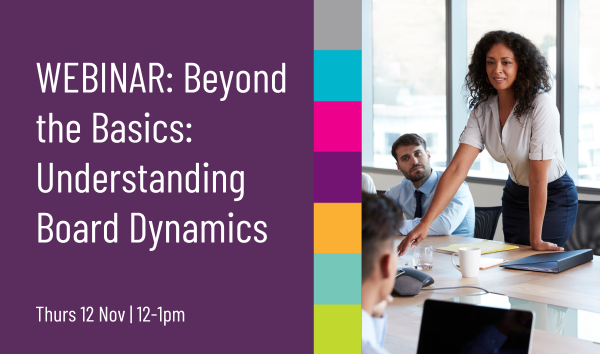
Healthy board dynamics: keeping influence in balance
Founders, experienced trustees, Chairs and Chief Executives can bring valuable knowledge and leadership to a charity. But problems can arise when one person’s influence starts to replace collective decision-making.
That was a key message from our recent webinar on board dynamics: no one person controls a charity. Trustees are collectively responsible for its governance and decisions.
Being influential is not itself a problem. Trustees should instead look at how decisions are being made. Warning signs might include information being controlled by one person, decisions happening outside meetings, trustees feeling unable to challenge proposals, or the board being asked to approve decisions that have effectively already been made.
Good governance means trustees have the information and opportunity they need to contribute. Challenge is part of being a trustee, not an act of disloyalty. Roles and responsibilities should also be clear, particularly between the Chair, board and Chief Executive.
A useful health check is to ask:
- Can trustees disagree without being marginalised?
- Are decisions properly made and recorded?
- Could the charity function if a key individual stepped away?
- Are everyone's roles and responsibilities clear?
If the answer to any of these questions is no, agree one practical improvement and review whether it has made a difference.
The takeaway? Influence must not replace governance. Clear roles, constructive challenge and collective decision-making help keep the charity's interests at the heart of the board's work.
Watch the webinar 'Beyond the Basics: Understanding Board dynamics'
Useful resources
Useful resources for managing charity trustees:
- Learning for OSCR’s inquiries: Dominant behaviour in charities
- Understanding roles and responsibilities (SCVO account needed to view)
- Scottish Third Sector Governance Code
- Guidance and good practice for charity trustees
More OSCR News:







Sign up for our newsletter
Keep up-to-date with news from OSCR, and get the best information and advice on how to run your charity effectively, by signing up for our regular newsletter, the OSCR Reporter.
Please read our Privacy Policy for details of how we will use your personal information.